
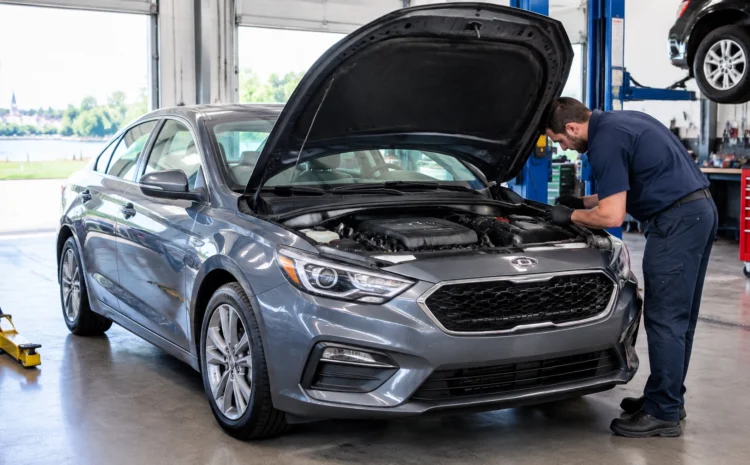
Why Is Your Steering Wheel Shaking? Common Suspension Issues Dover Drivers Miss
You feel it first in your hands.
The steering wheel trembles at highway speed. It shudders when you brake. Maybe the car feels loose over bumps or pulls slightly to one side.
What should you do?
Do not ignore it! A shaking steering wheel can come from something simple, such as an unbalanced tire. It can also point to worn steering or suspension components that affect your control and safety.
At First Class Car Care, we have more than 20 years of experience helping Dover drivers find the real cause. Here is how to understand the symptoms, what may be happening underneath, and when to schedule professional steering and suspension service.
First, identify when the steering wheel shakes
The timing and conditions matter. Before you visit a shop, pay attention to the pattern.
Does the steering wheel shake:
- At a specific highway speed?
- Only when you press the brake pedal?
- When you drive over bumps?
- While accelerating?
- Constantly, even at low speeds?
- Along with clunking, pulling, or unusual tire wear?
These details help your technician narrow down the cause. A vibration that happens only during braking points to a different problem than a shake that appears around 55 mph.
1. Shaking at highway speeds may start with the wheels or tires
A steering wheel that shakes mostly between approximately 50 and 70 mph often has a wheel or tire problem.
The most common causes include:
- An improperly balanced tire
- A missing wheel weight
- A bent wheel
- A tire with internal damage
- Uneven or cupped tread wear
- Incorrect tire pressure
- A worn wheel bearing
Wheel balance is not the same as wheel alignment. Balance corrects the distribution of weight around the wheel and tire. Alignment adjusts the angles at which the wheels meet the road.
If the balance is off, the tire may spin unevenly. You feel that movement through the steering wheel, especially as speed increases.
A tire can also look fine from the outside and still have internal damage. A hard impact from a pothole, curb, or rough road can damage the belt structure inside the tire.
Check your tire pressure and look for visible damage. Then have the wheel and tire professionally inspected. Continuing to drive at highway speed with a severe vibration can place extra stress on the steering and suspension system.
2. Tie rods can make the steering feel loose
Tie rods connect the steering system to the steering knuckle at each front wheel. They help your wheels respond when you turn the steering wheel.
When a tie rod end wears out, it may develop unwanted movement. You might notice:
- Steering-wheel vibration
- A loose or wandering steering feel
- Clunking when turning or driving over bumps
- Uneven front-tire wear
- The vehicle pulling or drifting
Why is this serious? Tie rods help control the direction of your front wheels. Excessive wear can make your vehicle less predictable, especially during an emergency maneuver.
Do you feel a delay between turning the steering wheel and the car responding? Do you need to make constant corrections to stay straight? Schedule a steering inspection promptly.
3. Worn ball joints can affect control and stability
Ball joints allow the suspension and steering knuckle to move together as your vehicle travels over uneven roads and turns.
They are small components with a major job.
A worn ball joint can cause:
- Steering-wheel shake
- Clunking or popping sounds
- Uneven tire wear
- A vehicle that wanders
- Instability over rough roads
- A loose feeling in the front end
Severely worn ball joints are a safety concern. In extreme cases, a failed ball joint can allow the wheel assembly to move out of its proper position.
Do not wait for a loud noise before taking action. If your steering feels loose or the vehicle behaves differently after hitting a bump, have the front end checked.
4. Control arms and bushings may be the hidden cause
Control arms connect the wheel assembly to the vehicle’s frame or body. Bushings cushion the connection and allow controlled movement.
Over time, bushings can crack, dry out, or separate. Control arms can also bend after an impact.
You may experience:
- Vibration while driving
- Clunking over bumps
- Pulling during braking
- Unstable handling
- Uneven tire wear
- A steering wheel that feels unsettled
Control-arm wear can be easy to miss because the symptoms may appear gradually. You may simply think the road feels rougher than usual.
Look for a pattern. Does the steering wheel shake more when you brake or accelerate? Does the car move slightly from side to side over uneven pavement? Those clues may point to control-arm or bushing wear.
5. Weak struts or shocks can let the tires bounce
Struts and shocks help control the movement of your springs and keep the tires planted on the road.
When they wear out, your vehicle may bounce excessively. The tires may lose consistent contact with the road, particularly over bumps or dips.
Common symptoms include:
- Repeated bouncing after a bump
- Excessive body movement in turns
- Nose-diving during braking
- A loose or floaty ride
- Fluid leaking from a strut or shock
- Uneven or cupped tire wear
- Steering vibration on rough roads
A worn strut or shock may not cause a shake at one exact speed. Instead, the vibration may appear when the suspension is working hard.
This matters for more than comfort. Poor suspension control can reduce handling stability and make braking less consistent. Check for leaks, but do not rely on a visual check alone. A technician needs to inspect how the component performs and whether related parts are also worn.

6. A shaking steering wheel during braking may indicate rotor trouble
Does the steering wheel shake when you press the brake pedal? That pattern often points to the brake system.
Brake rotors can develop uneven thickness or surface variation. Drivers often call this “warping.” When the brake pads clamp against the uneven rotor surface, you may feel a pulsing sensation through the brake pedal and steering wheel.
Other possible causes include:
- Unevenly worn brake pads
- A sticking brake caliper
- Loose or worn wheel bearings
- Worn control-arm bushings
- A problem with the wheel hub
Pay attention to how strong the vibration is. A mild pulse still deserves attention. A severe shake, pulling, grinding, burning smell, or soft brake pedal requires prompt service.
Do not test a suspected brake problem by continuing to drive aggressively. Your braking system is a safety system. Have the pads, rotors, calipers, wheel hubs, and nearby suspension components inspected together.
You can learn more about brake warning signs in our guide to signs you need brake repair.
Symptoms do not always identify the cause
Here is the tricky part: different problems can create similar symptoms.
A shaking steering wheel may involve:
- Tires or wheel balance
- Brake rotors or calipers
- Tie rods
- Ball joints
- Control arms and bushings
- Struts or shocks
- Wheel bearings
- Several worn components at the same time
For example, worn suspension parts can amplify a brake vibration. A tire may wear unevenly because of a suspension problem, then create a second vibration of its own.
That is why replacing one part based only on the symptom can waste time and money.
What to do when your steering wheel shakes
Follow these steps:
1. Slow down and assess the severity
Avoid high speeds if the vibration is strong or worsening. Do not continue driving if the steering feels dangerously loose, the vehicle pulls sharply, a wheel appears damaged, or you hear loud grinding or clunking.
2. Note the conditions
Write down whether the shake happens during:
- Highway driving
- Braking
- Acceleration
- Turning
- Bumps or rough roads
- Every type of driving
Your description can help the technician reproduce the problem.
3. Check the obvious items
Look at tire pressure and inspect the tires for bulges, cuts, or uneven wear. Do not crawl under the vehicle or attempt a suspension repair without the proper equipment and training.
4. Request a complete inspection
A proper steering and suspension inspection should include the tires, wheels, wheel bearings, tie rods, ball joints, control arms, bushings, struts, shocks, and related components. If the shake occurs during braking, the technician should also inspect the pads, rotors, calipers, and hubs.
5. Ask for a clear estimate
At First Class Car Care, our ASE-certified technicians explain what they find and provide transparent pricing with a detailed estimate before work begins. You should know what needs attention, what can wait, and why a repair is recommended.
Why Dover drivers choose First Class Car Care
Dover roads, seasonal weather, potholes, and daily stop-and-go driving can all place stress on tires, brakes, steering, and suspension components.
You need a shop that looks beyond the symptom.
At First Class Car Care, you get:
- More than 20 years of automotive repair experience
- ASE-certified technicians
- Complete vehicle inspections
- Steering, suspension, tire, and brake service
- Transparent estimates before repairs begin
- Quick turnaround when possible
- A 100% customer satisfaction commitment
- Free towing with repairs through our sister company, Harris Towing
Our suspension repair service guide explains why suspension condition affects ride quality, braking, and control. You can also learn more about choosing reliable auto repair in Dover, Delaware.
Do not ignore a shaking steering wheel
A steering wheel shake may be a simple balance issue. It may also be an early warning of worn steering, suspension, wheel, or brake components.
The safest move is clear: note when the vibration occurs, avoid risky driving, and have the vehicle inspected before the problem grows.
If you need dependable auto repair in Dover, DE, lean on First Class Car Care. Schedule your inspection online or call 302-736-5473. We will help you find the cause, understand your options, and get you back on the road with confidence!