Brake Repair in Dover, DE: What Your Squealing, Grinding, or Soft Pedal Is Really Telling You
Your brakes usually give you warning before a serious failure. You may hear a sharp squeal. Feel a pulse through the pedal. Notice your vehicle pulling when you stop.
So, what is your car trying to tell you?
Some brake symptoms point to normal wear. Others signal a safety issue that should not wait. This guide breaks down the sounds and sensations Dover drivers notice most often, and explains what each one can mean.
If your brakes feel different, trust that feeling! Schedule a free brake inspection at First Class Car Care before a small repair becomes a major one.
1. Your brakes squeal when you press the pedal
A high-pitched squeal is one of the most common brake complaints. But it does not always mean the same thing.
Possible causes include:
- Brake pads nearing the end of their usable life
- A built-in pad wear indicator making contact
- Brake dust or road debris
- Moisture on the braking surface
- Glazed pads or rotors
- Loose, worn, or improperly lubricated brake hardware
Did the noise happen only during your first few stops on a damp morning? Light surface moisture may be the reason. Does it happen every time you brake? That deserves a proper inspection.
Do not simply turn up the radio and hope the noise disappears. Worn pads can damage the rotors if you keep driving. A quick look through the wheel may not show the full picture, either. The inside pad can wear faster than the outside pad.
2. You hear grinding or scraping metal-on-metal
Grinding is more serious than squealing.
A harsh scraping sound often means the friction material has worn away. The metal backing plate may be contacting the rotor. Once that happens, your vehicle can suffer:
- Deep grooves in the rotors
- Reduced stopping performance
- Excessive heat
- Caliper damage
- A much higher repair bill
Are you hearing grinding every time you stop? Avoid driving unless you are moving the vehicle to a safe location. Continuing to drive may turn a brake pad replacement into a repair involving pads, rotors, calipers, and other hardware.
If the grinding began suddenly, stop somewhere safe and call for help. Through our sister company, Harris Towing, you can receive free towing with repairs at First Class Car Care.
3. Your brake pedal feels soft or spongy
A firm pedal should provide steady resistance. If the pedal feels soft, springy, or spongy, the hydraulic side of your brake system may have a problem.
Common possibilities include:
- Air in the brake lines
- Old or moisture-contaminated brake fluid
- A leaking brake hose or line
- A leaking caliper or wheel cylinder
- A failing master cylinder
- A damaged flexible brake hose
A soft pedal can reduce your ability to stop quickly. Pumping the pedal may temporarily make it feel firmer, but that does not fix the underlying problem.
Do not ignore a soft pedal! Schedule an inspection immediately. If the pedal is extremely soft or braking performance has changed significantly, have your vehicle towed rather than driving it across Dover.
4. The pedal or steering wheel vibrates when you brake
Do you feel a pulse under your foot? Does the steering wheel shake during a stop?
That often points to uneven rotor thickness or a rotor surface affected by heat. The issue may also involve worn brake hardware, a sticking caliper, suspension wear, or a wheel-related problem.
A technician needs to determine whether the vibration comes from the brake system or another part of the vehicle. That is why replacing pads automatically is not always the right answer.
A complete inspection can identify:
- Rotor thickness and surface condition
- Heat spots or uneven wear
- Caliper operation
- Pad contact patterns
- Wheel and suspension concerns
Ignoring brake vibration can make stopping less comfortable and less predictable. It may also allow related components to wear faster.
5. Your vehicle pulls to one side while braking
Your car should remain controlled and track straight when you stop. If it pulls left or right, something is not applying evenly.
Possible causes include:
- Unevenly worn brake pads
- A sticking or seized caliper
- A restricted brake hose
- A brake fluid leak
- Rotor or pad contamination
- Tire pressure or alignment problems
Which side does the vehicle pull toward? That information helps your technician begin the diagnosis, but it does not identify the cause by itself.
A sticking caliper can create excess heat on one wheel. You may notice a burning smell, unusual wheel heat, or accelerated pad wear. Check the problem promptly, especially before highway driving or a long trip.
6. The brake warning light or ABS light comes on
A dashboard warning light is not something to postpone.
The red brake warning light may indicate:
- The parking brake is still engaged
- Low brake fluid
- A hydraulic system problem
- Brake pad wear, depending on the vehicle
- A fault detected by the braking system
An amber ABS light may indicate a problem with the anti-lock braking system, wheel-speed sensor, wiring, or control module. Your regular brakes may still work, but the anti-lock function may not be available during an emergency stop.
Check the light as soon as possible! Do not guess based on how the car feels. Modern brake systems use sensors and electronic controls that require proper testing.
7. The pedal sinks toward the floor
A brake pedal that slowly sinks while you hold pressure is one of the most urgent warning signs.
It may indicate:
- An external brake fluid leak
- A failing master cylinder
- Air or moisture in the hydraulic system
- A damaged brake line or hose
- A caliper or wheel-cylinder problem
Can you press the pedal nearly to the floor? If yes, do not drive the vehicle. Move it only if necessary to avoid immediate danger, then arrange a tow.
A low pedal can mean the system is losing the hydraulic pressure needed to apply the brakes. This is not a “wait and see” symptom. Call First Class Car Care or Harris Towing for help.
What a real brake inspection should cover
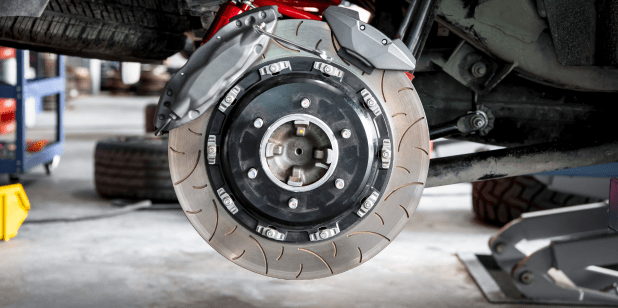
A proper brake inspection is more than looking through the wheel at the outside pad. At First Class Car Care, an inspection should evaluate the complete system and connect the symptoms to the actual cause.
Your technician should check:
-
Brake pad thickness
Pads should be measured, not judged by appearance alone. The inner and outer pads may not wear evenly. -
Rotors
Rotors need to be checked for thickness, grooves, heat damage, rust, cracks, and uneven wear. -
Calipers and hardware
Calipers must move correctly and release properly. Slide pins, clips, shims, and mounting hardware also matter. -
Brake fluid
The technician should check fluid level, condition, and possible contamination. Old fluid can absorb moisture over time. -
Brake lines and hoses
Lines and hoses need to be checked for leaks, cracks, swelling, abrasion, and corrosion. -
Parking brake and ABS operation
These systems can affect braking performance and may require separate testing. -
Road-test results
When safe, a road test helps confirm noise, pedal feel, vibration, pulling, and stopping behavior.
Why does this matter? Because a new set of pads will not solve a leaking line, sticking caliper, failing master cylinder, or corroded brake component.

Why winter brake checks matter in Dover
Dover’s colder months bring moisture, freezing temperatures, and road salt. Salt can accelerate corrosion on exposed brake hardware, steel lines, calipers, and other underbody components.
October is a smart time to check your brakes before winter driving begins. Do not wait until the first icy morning to discover a soft pedal or a seized caliper!
Before winter, ask your technician to look for:
- Flaking rust on brake lines
- Corroded calipers and brackets
- Sticking hardware
- Uneven pad wear
- Low or contaminated brake fluid
- Rotor rust and surface damage
This is especially important if you drive frequently, park outdoors, or operate a work vehicle in Dover and surrounding areas.
Clear estimates before brake work begins
Brake problems can be stressful enough without wondering what the repair will cost.
First Class Car Care provides a detailed estimate before any work begins. You can see which components need attention, what can wait, and what should be repaired for safe operation. No surprise work. No confusing last-minute bill!
Our ASE-certified technicians bring more than 20 years of experience serving Dover drivers. We focus on accurate diagnosis, quality repairs, and quick turnaround so you can get back on the road with confidence.
Do not wait for the symptom to get louder
A squeal may be an early warning. Grinding may mean damage is already occurring. A soft pedal, warning light, or sinking pedal can signal a serious hydraulic or electronic problem.
What should you do next?
Call First Class Car Care at 302-736-5473 or schedule your free brake inspection online. Visit us at 5360 N Dupont Hwy in Dover, DE. If your vehicle is not safe to drive, Harris Towing offers free towing with repairs.
Get the answer before the symptom becomes a safety risk. Your brakes deserve a complete inspection, and you deserve clear answers!